
Industry Prospective
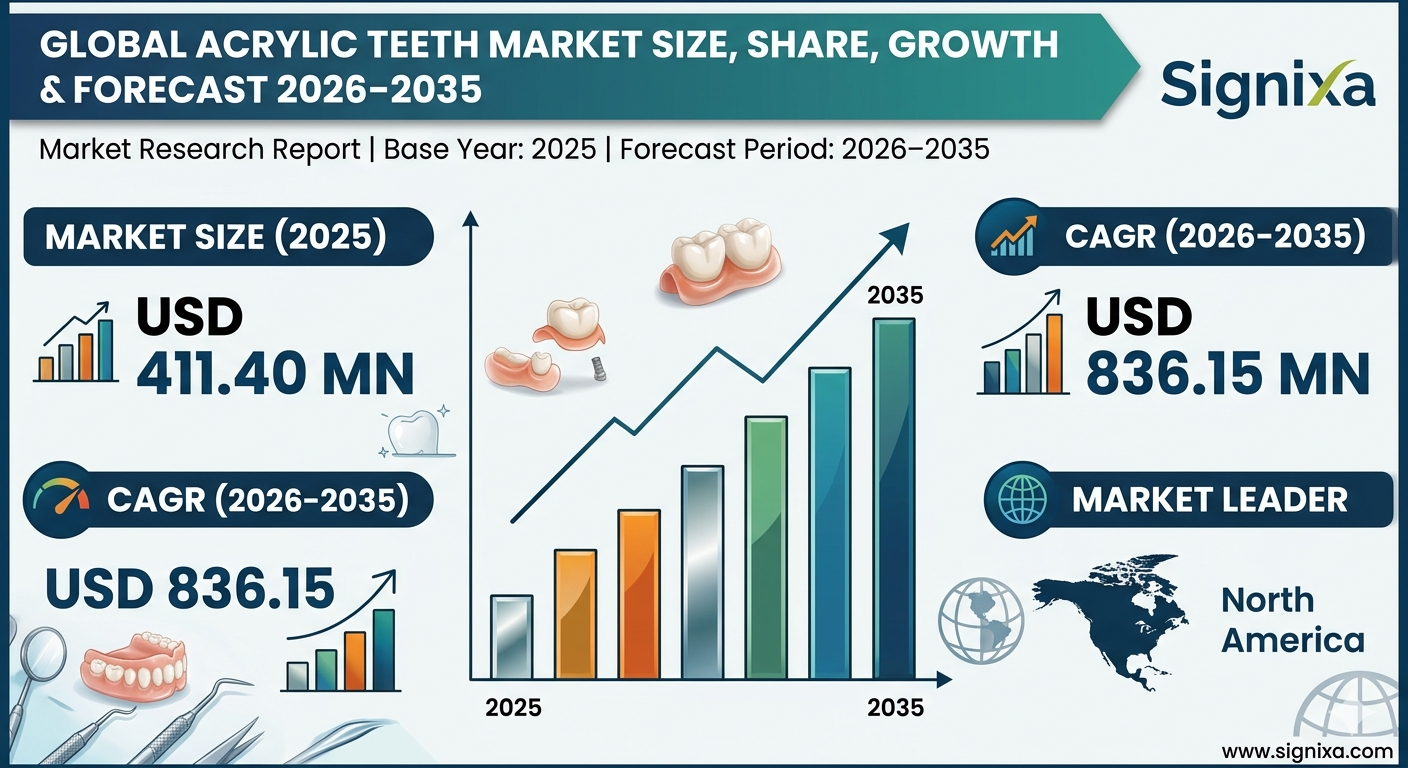
The size of the global acrylic teeth market was valued at approximately USD 411.40 Million in 2025 and is projected to reach around USD 836.15 Million by 2035, growing at a CAGR of 7.35% between 2026 and 2035. This report provides a thorough analysis of the market's growth drivers, restraints, and emerging opportunities across regional and global markets.
Acrylic Teeth Market Overview
The acrylic teeth market includes a variety of dental prosthetic options made primarily from polymethyl methacrylate (PMMA) for several types of dentures. These teeth offer lower cost prosthetic options that offer ease of customization and natural aesthetics. The demand in the acrylic teeth market is increasing as a result of a growing population of geriatrics, an increase in edentulism cases, advances in prosthetic design including CAD/CAM and 3D printing, and increased awareness from consumers of the importance of oral rehabilitation and cosmetic dentistry.
The acrylic teeth market is experiencing steady growth, driven by increasing demand for removable dentures, cosmetic dental applications, and affordable tooth replacement solutions. Acrylic teeth are widely used in full and partial dentures due to their lightweight nature, ease of fabrication, and cost-effectiveness compared to alternatives like porcelain. As aging populations rise globally — particularly in countries such as Japan, Italy, and Germany — the prevalence of edentulism (tooth loss) has led to increased adoption of acrylic-based dental prosthetics. Moreover, emerging economies are witnessing higher demand as access to dental care improves and awareness around oral health grows.
Technological advancements in dental materials have enhanced the strength, wear resistance, and aesthetic appeal of acrylic teeth, making them more popular in both functional and cosmetic dentistry. Additionally, dental laboratories and clinics are leveraging CAD/CAM systems and digital workflows to improve precision and turnaround time in manufacturing dentures, boosting market growth. The rise in dental tourism, particularly in countries like India, Mexico, and Hungary, is also contributing to the expansion of this market, offering cost-effective prosthetic treatments to international patients. However, challenges such as potential allergic reactions and color instability over time may limit preference among certain patient groups. Despite this, the market is expected to maintain momentum due to affordability and continuous material enhancements. Demand from geriatric and economically sensitive segments, along with the rise of aesthetic consciousness, will likely shape the future trajectory of the acrylic teeth market.
Key Findings
- The global acrylic teeth market is projected to grow at a CAGR of 7.35% from 2026 to 2035.
- Market value is expected to rise from USD 411.40 Million in 2025 to USD 836.15 Million by 2035.
- Partial dentures are gaining traction, but complete dentures continue to dominate the global market.
- Functionality remains the leading application segment, driven by the need to restore oral performance.
- CAD/CAM technology currently holds the largest market share, while 3D printing is rapidly emerging.
- North America is anticipated to lead the market, followed closely by Europe and Asia-Pacific.
Acrylic Teeth Market Dynamics
Rising Edentulism, Aging Populations & Expanding Dental Access in Developing Economies
The acrylic teeth market is experiencing growth with increasing global demand for dental prostheses due to rising edentulism among the aged populations and individuals recovering from oral trauma or surgery. Acrylic teeth provide a lightweight, customized, and cost-efficient solution for patients and professionals alike. Additionally, increasing access to dental care in developing economies is generating an increase in demand. This is particularly true where local/national governments and NGOs are promoting oral health in these countries as an important aspect of public health.
The acrylic teeth market is primarily driven by a growing aging population and the rising prevalence of edentulism globally. As life expectancy increases and oral health declines with age, the need for effective, comfortable, and cost-efficient tooth replacement options has become critical. Acrylic teeth offer a favorable solution due to their lightweight nature, ease of customization, and affordability, making them ideal for full and partial dentures, particularly in developing countries. Additionally, as governments and NGOs expand access to public dental care and insurance coverage improves in regions like Latin America and Southeast Asia, more patients can afford denture-based solutions. Technological integration into dental labs, including CAD/CAM manufacturing and digital impressions, has significantly improved product precision and patient satisfaction, further encouraging adoption. This aligns with the rising trend in aesthetic dentistry, where patients are increasingly focused on both function and appearance. The growing demand for removable and flexible dentures continues to support the market's expansion.
Digital Dentistry CAD/CAM Systems, 3D Printing & Digital Workflow Adoption
With the advent of digital technologies (CAD/CAM systems, 3D printing, etc.), the traditional process of manufacturing acrylic teeth has been disrupted with increased accuracy, customization, and speed. The aspect of dentistry that has benefited from digitization is not only aesthetics and function but improved efficiencies in dental laboratories. With the spread of digital workflows through clinics and laboratories, more patients will have access to high-quality precise fit dentures than ever before.
Cosmetic Dentistry Demand & Consumer Preference for Natural-Looking Prosthetics
The market is also impacted by the increasing awareness among consumers relating to cosmetic dentistry. People are demanding prosthetics that provide function as well as aesthetically, or naturally looking prosthetics. This is resulting in demand for acrylic teeth with natural translucency and color gradients that closely resemble natural teeth. Growing disposable income in emerging markets, social media influence, and marketing campaigns are all part of the increased demand for aesthetic dental solutions.
Dental Tourism, Material Innovation & Market Headwinds
On the other hand, market growth is also influenced by evolving patient expectations, material innovation, and the increasing role of dental tourism. Acrylic teeth are being upgraded with enhanced strength, stain resistance, and natural-looking finishes, narrowing the gap with premium alternatives like porcelain. Dental tourism hubs in countries like India, Turkey, and Thailand are expanding the patient pool for acrylic-based dentures by offering high-quality, low-cost treatments, attracting international customers. Furthermore, the rise in cosmetic dentistry among middle-aged and young populations is creating new demand segments, especially as procedures become more accessible and socially normalized. However, the market faces headwinds from concerns over the durability of acrylic materials and potential allergic reactions in some patients. Environmental concerns regarding acrylic resin production may also prompt shifts toward bio-based materials in the future. Nevertheless, affordability, accessibility, and technological adaptation are expected to maintain strong market momentum, especially in cost-sensitive and aging demographics.
Acrylic Teeth Market Segmentation Analysis
By Type Segment Analysis: Partial Dentures, Complete Dentures & Overdentures
Partial Denture
Partial dentures made from acrylic teeth are used to replace one or several missing teeth, and are designed to be kept in place with existing natural teeth. These are budget-friendly, easy to modify and are currently used in many developing countries and other less-affluent places. This category is on the upward trend with increasing dental awareness and affordable ways of obtaining them.
Complete Denture
Complete dentures are the largest segment in the global market, constituting over 45% of revenue share in 2025. Complete dentures are generally used when a subject experiences total tooth loss, which is usually the case for geriatric patients. The aging global population and increased prevalence of total edentulism will be the driving forces behind complete dentures increasing their dominance.
Overdenture
Overdentures are prostheses that are retained or supported by natural teeth or implants. They enhance retention and stability in the mouth. Overdentures are far less common than complete dentures, but their use is growing. This is due to greater awareness and utilization of implants, as well as demand for increased comfort with prosthetics. The integration of overdentures with CAD/CAM design is further enhancing their precision and patient acceptance.
By Application Segment Analysis: Functionality vs. Aesthetics
Functionality
Functional applications of acrylic teeth are focused on restoring chewing efficiency, speech, and other overall oral health. This segment has the largest share, nearly 60% in 2025, as functionality remains the main reason why patients desire denture solutions. Restorative dentistry driven by edentulism, trauma, and systemic disease continues to make functional rehabilitation the primary driver of acrylic teeth adoption globally.
Aesthetics
Aesthetic applications are continuously propelled by increasing demand for natural-appearing teeth that match or complement facial features. This market segment is expected to have a CAGR of 8.1% during the forecast period due to the rise of cosmetic dentistry and increased preference by consumers for lifelike prosthetics with more shade matching and gum line accuracy. Social media influence, rising disposable incomes in emerging markets, and increased accessibility of cosmetic dental procedures are all accelerating this trend.
By Technology Segment Analysis: CAD/CAM vs. 3D Printing
CAD/CAM Technology
CAD/CAM technology continues to dominate due to its accuracy, repeatability, and time efficiency. CAD/CAM technology allows for designed contours to be milled from blocks that are defined by digital models. Fit and longevity of dentures are typically better when milled rather than processed. This segment accounted for over 55% of global market share in 2025. The widespread adoption of intraoral scanners and digital impression systems is further strengthening the position of CAD/CAM-based workflows across dental clinics and labs globally.
3D Printing
3D printing is the fastest growing technology segment, with a forecasted growth rate above 9% CAGR in the period ahead. 3D printing provides mass customization, less waste, and shorter production time. As prices for printers decrease, and dental material advances, the speed of 3D printing in dental clinics and labs is increasing rapidly. Dentsply Sirona's Lucitone Digital Print Denture System exemplifies how leading manufacturers are integrating 3D printing into complete digital denture workflows.
Report Attributes & Market Scope
| Report Attribute | Details |
|---|---|
| Market Size Value in 2025 | USD 411.40 Million |
| Market Size Value in 2035 | USD 836.15 Million |
| CAGR (2026–2035) | 7.35% |
| Base Year Used for Estimation | 2025 |
| Historic Data | 2020-2025 |
| Forecast Period | 2026-2035 |
| Segments Covered -By Type |
|
| Segments Covered -By Application |
|
| Segments Covered -By Technology |
|
| Regions Covered | North America, Europe, Asia Pacific, Latin America, Middle East and Africa |
| Major Countries Covered | U.S., Canada, Mexico, Germany, UK, France, Italy, Spain, Russia, China, Japan, South Korea, India, Southeast Asia Countries, Brazil, Argentina, GCC Countries, Turkey, Iran, Israel, South Africa, Egypt, Nigeria, etc. |
| Key Companies Profiled | Dentsply Sirona Inc., Ivoclar Vivadent AG, GC Corporation, Kulzer GmbH, VITA Zahnfabrik, Yamahachi Dental Mfg. Co., Shofu Inc., Ruthinium Group, New Stetic S.A., and JH Dental Lab. |
Acrylic Teeth Market Regional Analysis
As a result of the high incidence of edentulism in the aging population, strong dental infrastructure, and the emphasis on prosthetic treatment covered by insurance, North America will retain its global lead in the acrylic teeth market. Europe followed in market demand, which is supported by an aging population and strong emphasis on oral health. The Asia-Pacific region, however, will witness expedited growth during this period due to increasing healthcare expenditures, urbanization, and knowledge of prosthodontics in countries such as India, China, and South Korea. The Latin America and the Middle East & Africa regions are emerging markets that have potential for growth, but are currently underdeveloped. Both of these markets have increasing dental outreach programmes aimed at oral health, and are placing the foundation for increased growth in healthcare infrastructure.
North America (Market Leader)
North America will retain its global lead in the acrylic teeth market due to the high incidence of edentulism in the aging population, strong dental infrastructure, and the emphasis on prosthetic treatment covered by insurance. The United States leads the region, supported by an advanced dental care system, widespread dental insurance coverage, and a large population of elderly patients requiring full and partial dentures. The early adoption of CAD/CAM technology and 3D printing in dental laboratories has further elevated product quality and precision. Additionally, strong investment in dental education, research, and material science innovation continues to reinforce North America's competitive position in acrylic teeth manufacturing and distribution.
Asia-Pacific (Fastest Growing)
The Asia Pacific region represents a rapidly expanding market for acrylic teeth, driven by a large and aging population, improving dental infrastructure, and increasing awareness of oral health. Countries such as China, India, Japan, and South Korea are witnessing a surge in demand for dentures and tooth replacement solutions due to the growing prevalence of edentulism, especially among the elderly. Government healthcare reforms and expanding insurance coverage in countries like China and India are making dental prosthetics more accessible to middle- and lower-income groups. Additionally, the increasing adoption of CAD/CAM technologies in dental laboratories and clinics across the region is enhancing the precision and efficiency of denture production using acrylic materials. Furthermore, dental tourism is playing a pivotal role in regional market growth. Countries like Thailand, Malaysia, and India have become prominent destinations for cost-effective yet high-quality dental care, attracting patients from Europe, the Middle East, and North America. The affordability of acrylic dentures compared to porcelain makes them a popular choice among these medical tourists. Rising disposable incomes and shifting attitudes toward dental aesthetics, particularly among urban populations, are also encouraging people to seek cosmetic dental solutions. Manufacturers in Asia Pacific are investing in product innovation, offering acrylic teeth with improved strength, lifelike appearance, and biocompatibility to meet growing patient expectations. However, the market still faces challenges such as uneven access to dental care in rural areas and concerns over material longevity. Despite this, the region's favorable demographics, policy support, and evolving dental care ecosystem make it a key growth area for the acrylic teeth market.
Europe
Europe represents a mature and innovation-driven market for acrylic teeth, supported by a well-established dental care infrastructure, favorable reimbursement policies, and strong demand for restorative and cosmetic dental solutions. Countries such as Germany, France, Italy, the UK, and Spain lead the regional market, with a high prevalence of aging populations and edentulism driving the need for dentures and prosthetic teeth. Public healthcare systems across Western Europe often provide partial or full coverage for dental prosthetics, making acrylic teeth a cost-effective and widely chosen solution, especially among elderly patients. The region's emphasis on patient safety, product quality, and regulatory compliance ensures a steady demand for CE-marked acrylic teeth with high standards of aesthetics and biocompatibility.
The European market is also characterized by increasing technological integration in dental clinics and laboratories. The adoption of digital impression systems, CAD/CAM manufacturing, and 3D printing technologies is improving the precision, customization, and efficiency of acrylic denture fabrication. Additionally, the trend toward minimally invasive and cosmetic dentistry is encouraging dental professionals to offer more natural-looking, aesthetically pleasing acrylic options. Educational institutions and professional training programs across Europe continue to upskill dental practitioners, promoting the adoption of advanced materials and methods. Moreover, the rise of eco-conscious healthcare practices is pushing manufacturers to innovate sustainable and BPA-free acrylic alternatives. However, the market faces challenges such as growing competition from alternative materials like zirconia and ceramic. Still, Europe's aging population, public investment in oral healthcare, and push toward digital transformation continue to reinforce its position as a prominent market for acrylic teeth.
Middle East & Africa
The Middle East and Africa (MEA) region presents a growing but diverse market for acrylic teeth, shaped by varying levels of economic development, healthcare infrastructure, and dental awareness across countries. In the Gulf Cooperation Council (GCC) nations such as the UAE, Saudi Arabia, and Qatar, the dental care industry is expanding rapidly due to rising disposable incomes, increased health consciousness, and the growth of private healthcare facilities. Demand for restorative and aesthetic dental treatments, including acrylic dentures and prosthetic solutions, is on the rise, supported by medical tourism and government investments in modernizing healthcare services. Urban centers in these countries are witnessing a shift toward advanced dental materials and technologies, including high-quality, digitally designed acrylic teeth.
In contrast, several parts of Africa face constraints such as limited access to dental care, low awareness of oral hygiene, and insufficient public funding for prosthodontic services. However, international health initiatives, NGO-driven dental outreach programs, and local manufacturing of cost-effective acrylic dentures are helping address some of these gaps. Countries like South Africa and Egypt are emerging as regional hubs for dental training and treatment, offering potential for market development. Furthermore, population growth, increasing life expectancy, and a rising middle class are expected to generate demand for affordable and durable dental prosthetics, particularly acrylic-based products. The MEA market also benefits from lower regulatory hurdles compared to Europe, enabling quicker product introductions. As awareness improves and infrastructure develops, the region holds promising long-term opportunities for acrylic teeth manufacturers focused on affordability, accessibility, and product customization.
Latin America
Latin America is an emerging market for acrylic teeth with potential for growth. The region has increasing dental outreach programmes aimed at oral health, and is placing the foundation for increased growth in healthcare infrastructure. Brazil and Mexico are the largest markets, driven by expanding access to dental care, government oral health programs, and the growth of dental tourism. Improving public dental coverage, rising middle-class incomes, and a large population base with unmet prosthodontic needs position Latin America as a high-potential growth region for affordable acrylic dental prosthetics.
Recent Developments in the Acrylic Teeth Market
-
2023
Dentsply Sirona launched its next-generation Lucitone Digital Print Denture System, integrating advanced 3D printing for high-strength, aesthetically pleasing acrylic teeth, enabling efficient digital workflows for partial and complete dentures. The system demonstrates Dentsply Sirona's commitment to fully digital prosthodontic solutions that enhance laboratory efficiency and patient outcomes.
-
2022
Ivoclar Vivadent introduced Ivotion Denture System 2.0, an upgraded CAD/CAM-based system with improved milling capabilities and enhanced anatomical tooth libraries to support better functional and aesthetic outcomes. The system represents a significant advancement in monolithic denture fabrication, combining both denture base and teeth in a single milling process for improved fit, accuracy, and efficiency.
Acrylic Teeth Market: Competitive Landscape
The acrylic teeth market is somewhat concentrated, with major players investing in R&D, customization, and digital solutions to improve patient outcomes. Prominent companies in the global acrylic teeth market include Ivoclar Vivadent, Dentsply Sirona, Heraeus Kulzer, Modern Dental Group, and Yamahachi Dental. These players are focused on expanding their digital prosthodontic portfolios and strategic partnerships with dental clinics and laboratories to increase market share. The market landscape is changing due to innovations in 3D printing and an influx of newcomers, and their solutions aimed at accommodating digital workflows.
The competitive landscape of the acrylic teeth market is shaped by technological innovation, strategic collaborations, and a growing emphasis on product customization. Companies are increasingly investing in research and development to enhance the durability, aesthetics, and biocompatibility of acrylic-based dental prosthetics. Innovations such as CAD/CAM integration and 3D printing are enabling more precise and efficient production, giving rise to personalized prosthetic solutions that meet diverse patient needs. This technological evolution is also helping companies streamline their manufacturing processes while improving patient comfort and clinical outcomes.
Global and regional players are differentiating themselves through pricing strategies, value-added services, and rapid product delivery systems. Many suppliers are expanding their footprint in emerging markets by partnering with dental clinics, distributors, and educational institutions to strengthen brand presence and promote product adoption. Additionally, manufacturers are offering training programs for dental technicians and clinicians to improve the quality of prosthetic fittings and raise awareness of the benefits of modern acrylic teeth.
The market is also witnessing a growing demand for eco-friendly and BPA-free acrylic materials in response to consumer preferences for safer, non-toxic products. Regulatory compliance, certifications, and adherence to international quality standards remain essential for gaining customer trust and ensuring competitive advantage. While competition remains intense in developed markets, growth opportunities in emerging regions are prompting firms to localize production, reduce costs, and innovate in design and formulation. The acrylic teeth market's competitiveness will likely intensify as more players enter with advanced materials, improved workflows, and patient-focused solutions tailored to regional demands.
Key Companies Profiled
Global Acrylic Teeth Market Segmentation Summary
By Type
By Application
By Technology
By Region
Frequently Asked Questions (FAQs): Acrylic Teeth Market
What are acrylic teeth?
Acrylic teeth are prosthetic dental components made from polymethyl methacrylate (PMMA) or other acrylic resins, commonly used in dentures, partial dentures, and overdentures due to their affordability, natural appearance, and ease of customization.
Which key factors will influence the acrylic teeth market growth over 2026-2035?
The global acrylic teeth market is projected to grow due to increasing geriatric population, rising cases of edentulism, growing demand for removable prosthetics, and advancements in CAD/CAM and 3D printing technologies supporting efficient denture production.
What will be the value of the acrylic teeth market during 2026-2035?
According to the study, the global acrylic teeth market size was valued at approximately USD 411.40 Million in 2025 and is expected to reach around USD 836.15 Million by 2035.
What will be the CAGR value of the acrylic teeth market during 2026-2035?
The acrylic teeth market is expected to expand at a CAGR of 7.35% during the forecast period from 2026 to 2035.
Which region will contribute notably towards the acrylic teeth market value?
The Asia-Pacific region is expected to witness notable growth in the acrylic teeth market due to its large aging population, expanding dental infrastructure, and increasing adoption of prosthetic dental solutions. North America and Europe also hold significant market shares.
Which are the major players leveraging the acrylic teeth market growth?
Key players in the acrylic teeth market include Dentsply Sirona Inc., Ivoclar Vivadent AG, GC Corporation, Kulzer GmbH, VITA Zahnfabrik, Yamahachi Dental Mfg. Co., Shofu Inc., Ruthinium Group, New Stetic S.A., and JH Dental Lab.
What can be expected from the global acrylic teeth market report?
The report offers a comprehensive analysis of the acrylic teeth market, covering market size, trends, drivers, restraints, segmentation, regional outlook, and the competitive landscape. It also evaluates innovations in denture fabrication and forecasts growth opportunities for acrylic tooth manufacturers and dental labs.